

Instagram Strategy for Ecommerce: A Complete Guide
Learn how to build a winning instagram strategy for ecommerce. Discover content planning, product showcases, and tactics to boost your sales.
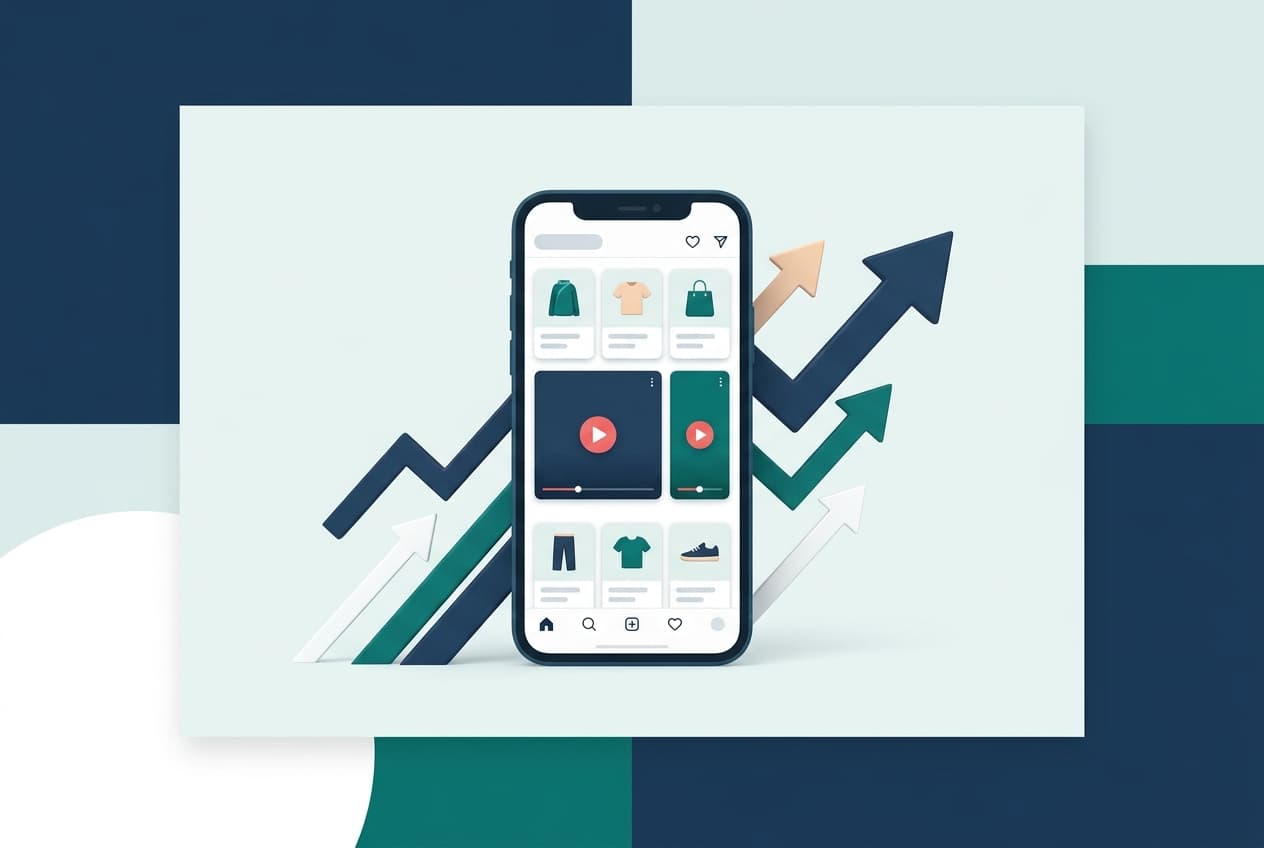
An effective instagram strategy for ecommerce connects your brand with potential customers and turns engagement into direct sales. Success relies on clear product visuals, engaging Reels videos, and a balanced content mix. Regular posting and continuous data analysis ensure your strategy stays fresh and effective.
Building an effective instagram strategy for ecommerce requires far more than posting attractive product photos. Today, online shoppers visit your social channels immediately after discovering a product to evaluate trust signals before purchasing. A well-planned content and marketing strategy is your best tool for capturing attention and converting followers into loyal customers.
In this guide, you will discover a step-by-step approach to growing your online store's sales. From optimizing your profile and producing product-focused Reels to planning feed aesthetic and launching targeted ads, we cover how to execute every phase efficiently.
Why is an instagram strategy for ecommerce critical?
Instagram acts as a digital storefront and primary touchpoint for modern ecommerce brands. Before purchasing, users browse a brand's feed to check customer reviews, product demo videos, and brand authenticity. Random posting damages customer trust, whereas a structured strategy elevates overall brand value.
Establishing a regular publishing schedule is vital for growing store revenue. Leveraging proven small business social media management techniques allows you to manage time and resources efficiently. A well-optimized account lowers ad spend while boosting organic conversion rates.
To build a structured flow, define your target audience first and outline a weekly posting calendar. For instance, instead of uploading 10 random product images a week, craft videos that show real-life use cases. This approach helps followers understand why they need your product rather than just seeing it.
A common mistake is treating your profile purely as a static digital catalog while ignoring direct messages and comments. Interacting with your community builds brand loyalty. Providing solution-driven content instead of constantly hard-selling increases long-term customer lifetime value.
How to optimize your Instagram profile for sales
A sales-focused Instagram profile should clearly convey what you sell within the first 3 seconds of a visit. Your bio section must highlight your unique value proposition and feature a strong call to action driving visitors to your site.
A crisp profile photo and organized story highlights quickly establish trust. Save key information like customer reviews, shipping policies, FAQs, and tutorial guides directly into your highlights. Ensure your bio link functions perfectly and leads to active campaign landing pages.
- Pick a clean, memorable handle.
- Write a concise bio stating your core offering and unique advantage.
- Add a working website link in your profile bio.
- Organize story highlights for reviews, FAQs, and shipping information.
To set this up, start by using a high-resolution version of your logo as your profile picture. Highlight your biggest competitive perk in your bio, such as 'Same-Day Shipping' or '100% Organic Cotton'. Group your highlights into 4 main categories like 'Reviews', 'Shipping & Delivery', and 'Best Sellers'.
Avoid overcrowding your bio with confusing text or linking to broken pages. If users cannot access the item they want with one tap, they will leave your page. Always ensure your link directs users straight to the relevant product category.
How to balance your content mix
Posting only studio product shots will quickly cause follower fatigue. Successful ecommerce accounts balance educational, entertaining, trust-building, and direct sales content.
Applying established content mix rules allows you to showcase products naturally without boring your audience. Aim to allocate roughly 60% of your posts to education and entertainment, 20% to customer stories and behind-the-scenes content, and 20% to direct promotional offers.
For example, if you manage an apparel brand, sharing outfit styling ideas serves as educational content, showing your design process builds trust, and announcing a store discount drives direct sales. Maintaining this balance keeps engagement metrics high.
When planning a 10-post block, schedule 6 posts for helpful tips or styling guides, 2 for customer unboxings or testimonials, and 2 dedicated to product promotions. Preserving these ratios throughout the month keeps your organic reach consistent.
A frequent error during sales campaigns is filling the entire feed with relentless 'Buy Now' demands. When users feel constant sales pressure, they unfollow. Never skip value-adding and educational content.
How to create high-converting Reels videos
Reels are the primary format for ecommerce brands to reach new potential buyers and show products in motion. Short, dynamic videos that hook viewers instantly generate much higher impression numbers.
Focus on demonstrating how a product solves a specific pain point rather than just displaying it. Understanding how to write a reels hook keeps viewers engaged long enough to watch the full video. Capturing attention within the first 3 seconds with text or visual motion dramatically boosts total watch time.
Product tutorials, unboxing clips, and before-and-after transformations yield high conversion rates on Reels. Include a clear instruction in the caption asking viewers to look up the product on your site.
For example, if you sell kitchen gadgets, open your video with on-screen text like '3 time-saving kitchen hacks.' Demonstrate practical usage in the first 2 seconds, highlight the product's value, and end with a caption CTA like 'Explore on our site.'
A major pitfall is starting videos with static visuals, missing logos, or background audio alone without explaining product utility. Viewers will scroll past instantly if they do not spot immediate value.
How to align organic posts with Meta ads
While organic content builds overall trust, integrating Meta paid ads accelerates audience growth. Running ads on top-performing organic posts significantly lowers overall advertising costs.
To scale efficiently, apply smart protect your ad budget techniques. Setting up retargeting ads aimed at past site visitors who abandoned carts maximizes conversion efficiency.
Ad creatives should remain crisp, product-focused, and offer-driven. Emphasizing discount codes or limited availability helps shorten the customer's decision-making timeline.
To integrate ads, identify your top 3 Reels with high comment and save rates. Promote these posts to custom target audiences inside Meta Ads Manager to capture cost-effective add-to-cart conversions.
A common mistake is assigning heavy budgets to posts that performed poorly organically. A creative that failed to engage users naturally will likely struggle in ad auctions and waste money.
How Controom streamlines ecommerce social media management
Managing an online store while continuously producing graphic assets, editing videos, and scheduling content can be overwhelming. Controom works as an AI-powered social media and ad creation assistant designed to offload this workload.
Simply upload product photographs, and Controom generates eye-catching ad visuals along with 8-, 15-, and 30-second video variations. It organizes your content plan in line with a customized how to create a social media content calendar guide and publishes approved posts automatically across Instagram and Facebook. Discover more on our how it works page.
The setup is simple: the platform generates visual assets and copy matched to your brand guidelines, and you approve them with a single click inside your dashboard. This saves hours of brainstorming and editing work.
The single biggest error in social operations is irregular posting. Automation through Controom keeps your posting frequency continuous, giving you more energy to focus on inventory and store ops.
Nothing goes live without your explicit approval. The system evaluates weekly performance metrics to test new visual angles, progressively expanding your brand's footprint on Instagram.
What should your next step be?
A successful marketing strategy requires consistency over time. Audit your profile today, fix missing elements, and establish a weekly calendar to publish content regularly.
As an immediate action item, update your bio today and outline the concept for your next product feature Reel. Analyze your performance analytics weekly to double down on formats that bring high conversions.
Continuing to publish uniform content without evaluating real performance metrics is a major setback. Monitor which post formats produce sales orders and refine your approach based on store data.
To automate visual creation, optimize spend, and scale your content mix with AI, visit our pricing page to choose the ideal plan for your brand.
Frequently asked questions
How often should an ecommerce brand post on Instagram?
For ecommerce brands, publishing at least 3 to 4 Reels and 2 to 3 image or carousel posts weekly works best. Posting daily Stories helps keep user engagement high.
Do you need paid ads to sell products on Instagram?
Organic posts cultivate community trust, but integrating Meta ads helps you scale revenue fast and target specific buyer personas directly.
Do Instagram Reels directly increase store sales?
Yes, short Reels showing product features, unboxings, or real customer usage generate some of the highest purchase conversion rates on the platform.
Let Controom do this for you.
It learns your brand, builds your calendar, creates the content and reminds you to post it when the time comes.